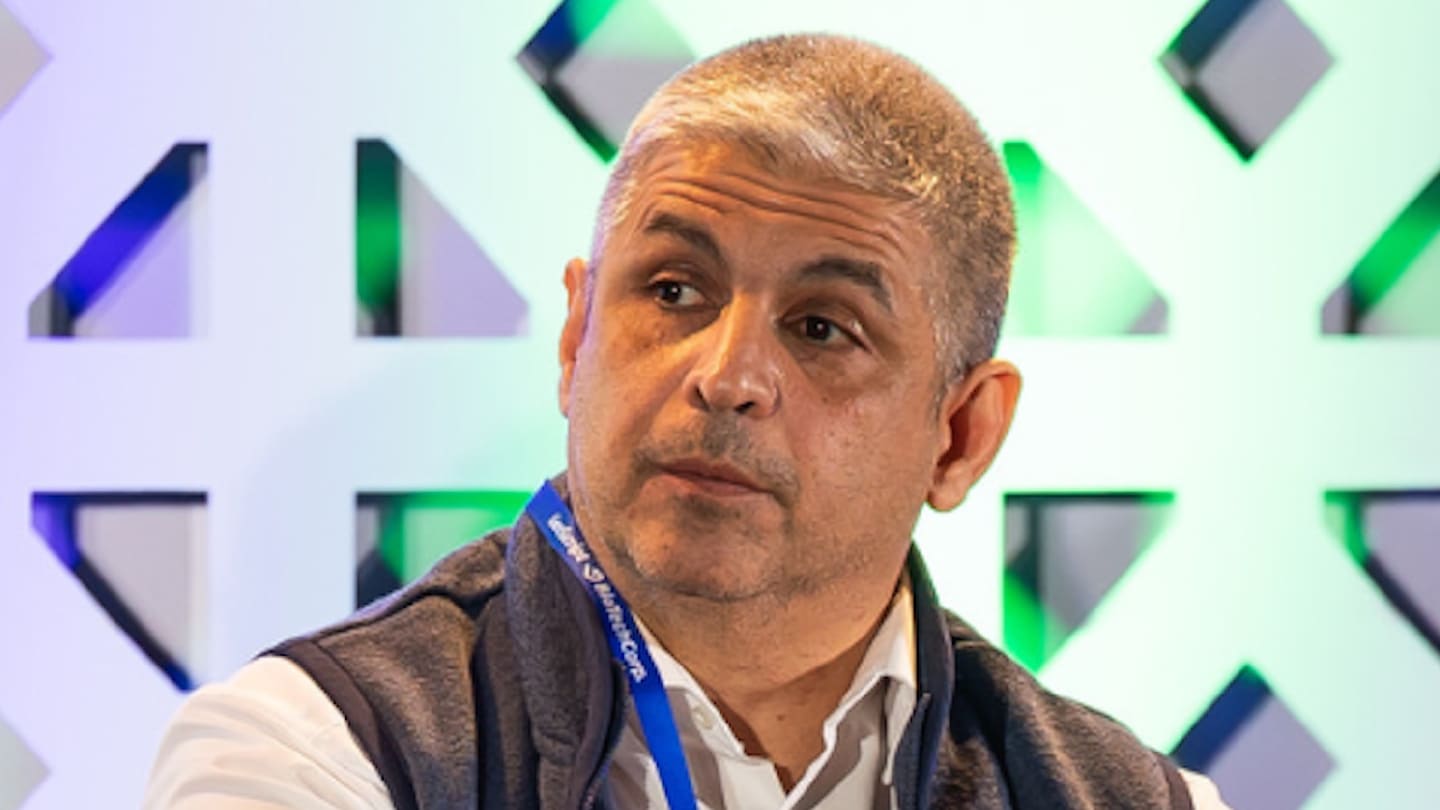
Continuing our series on the evolving investment environment in cell and gene therapy, Treehill Partners’ founder Ali Pashazadeh reflects on a sector being reshaped by tighter capital, changing investor expectations, and the growing need for speed, discipline, and a global perspective.
Drawing on his experience advising biotech companies around the world, he also considers how the rise of Chinese biotech – and the increasingly multipolar nature of drug development – is forcing Western companies, investors, and pharma leaders to rethink old models.
Please give me an overview of your career?
I started in biochemistry at Imperial College, researching the chemical pathology of breast cancer, before training at St Mary’s Hospital in Paddington and graduating in 1995. I still practice medicine and am about to complete my 31st revalidation.
I left full-time clinical medicine in 2000 to attend London Business School before moving into investment banking at Goldman Sachs, UBS, and later Blackstone. About 12 years ago, I founded Treehill Partners.
Today, Treehill focuses on four main areas: investment banking advisory on buy- and sell-side deals; drug development advisory, helping companies reduce timelines and improve efficiency; biotech turnarounds for companies struggling with funding or management; and new company creation, where we identify promising molecules, build management teams, and help launch new biotech businesses.
What has changed most in biopharma and advanced therapies over the past five years?
About 63 percent of biologics still lack biosimilars because developers previously needed expensive phase III trials. That requirement is now disappearing, but the biotech pipeline has weakened at the same time as large pharma’s need for new assets is growing. Smaller acquisition targets that once filled pipeline gaps are scarce, while companies such as Eli Lilly have expanded dramatically in market value and now require increasingly larger deals to sustain growth.
Many biotechs are holding onto late-stage assets despite lacking the expertise or funding to run phase III trials, partly because public markets and crossover funding have remained weak for the past four years. CRO costs also remain high. As a result, the flow of biotech innovation into large pharma pipelines has slowed just as major patent expirations loom. For example, companies facing loss of blockbuster products such as Keytruda have limited near-term replacements.
Specialty pharma has performed well, but the sector is highly concentrated and increasingly exposed to geopolitical and therapeutic-area risks. Tariffs, supply-chain concerns, and shifts in demand – such as declining enthusiasm for vaccines – are pushing companies to diversify geographically and therapeutically.
Biotechs have also struggled through years of limited funding, while the industry increasingly requires combination therapies rather than single-agent drugs. Many management teams lack experience advancing programs beyond phase II.
At the same time, Chinese biotech companies are accelerating development timelines and lowering costs dramatically. Companies in China can reportedly move from molecule discovery to treating 15 patients in a phase I trial for less than US$1 million, compared with the five to 10 million dollars and several years often required in Europe or the US. China’s biotech ecosystem now includes deep pipelines across numerous companies, while Korea alone has roughly 400 biotech firms.
The result is a much more competitive global market in which speed and efficiency are critical. At Treehill, one example cited was the review of 28 molecules for a large venture capital firm in just 10 days at a relatively low cost per asset. That level of efficiency, they argued, is becoming essential for survival across pharma, consulting, and investment banking.
AI is accelerating these trends too. Tasks that previously required months through CROs – such as preparing IND documentation – can now reportedly be completed within weeks or even days using AI tools, creating a very different pharmaceutical landscape from even five years ago.
How have China and Korea built biotech ecosystems that can move faster and operate more efficiently than many Western companies?
Korea and China have taken very different paths. Korea’s biotech sector grew out of heavy government investment about a decade ago, producing highly methodical, scientifically driven companies with world-class technology and research capabilities – similar to the expertise behind companies such as Samsung and Hyundai. However, many Korean biotechs tend to advance programs only to phase IIa before seeking licensing deals, partly because long-term funding and commercial infrastructure have not kept pace.
China, by contrast, has followed a model similar to its automotive industry: rapid scaling through years of iteration. Early products were often dismissed as lower quality, but over time Chinese companies developed globally competitive capabilities. Contract research and manufacturing groups such as WuXi built expertise by running studies and producing drugs for Western companies before applying that infrastructure to their own pipelines.
Chinese firms also operate with lower margins, faster timelines, and greater efficiency. Combined with strong government support, a large returning talent base, and an intense work ethic, that has created a highly competitive biotech ecosystem that is difficult for Western companies to match.
Is there anything Western governments could do to support the industry in a similar way?
If Western governments woke up to the scale of the challenge, that alone would be refreshing. Take the UK as an example: biotech receives relatively little meaningful support. As a result, many of the country’s best scientific and engineering minds end up working for US, Australian, or increasingly Chinese companies rather than building UK-based businesses.
In many ways, the brain drain has already happened. The question now is whether governments recognize that something needs to change. Even when opportunities emerged – such as Chinese companies considering expansion into Europe and the UK during periods of US pricing pressure – Western systems struggled to capitalize. There were extensive discussions with groups such as the NHS, but little materialized. In effect, even when handed an open goal, the UK failed to score.
If these trends continue over the next five to 10 years, how do you see the biotech and biopharma landscape evolving?
I think this is one of the most fascinating and transformative periods the industry has seen. The old model – finding a molecule and slowly advancing it over 20 years – is disappearing. Companies now have to move quickly, adapt, and prove value much earlier.
Large pharma faces major change. AI is already reshaping drug development, and companies will also need to rethink sales models, manufacturing, and deal structures. Biotech companies formed in 2026 will look very different from those launched in 2019, while investors are becoming far more selective about where they deploy capital.
Investors increasingly want to understand not just the science, but the “story behind the story” – where markets are moving, where value will emerge, and which sectors are truly investable. At Treehill, working closely with large CROs gives us visibility into where pressure points are emerging across phase I, II, and III development, including where biotechs and specialty pharma companies are struggling.
The next decade will likely bring major geographic shifts as well. Some companies may move away from the US or even develop drugs specifically for non-US markets. We’re also likely to see funding concentrate around experienced management teams with genuine global reach across China, Japan, Europe, and the US.
What is the new investment model? Is this transition widely known and appreciated?
I think private equity is facing a much harder environment because exits have become far less predictable. For the past 20 years, firms have invested in health care assets with stable cash flows, but those cash flows are no longer as reliable as they once were. Buying assets is still possible; the challenge is knowing how and when you will exit them.
Going forward, the key differentiator will be management quality rather than manufacturing scale alone. A biotech can no longer operate solely within the US and expect a straightforward licensing or acquisition path there. Companies increasingly need global strategies that include China and multinational clinical development.
That means investors are looking for management teams capable of operating on a global stage and adapting commercially as markets evolve. Commercial viability now has to be built into development plans from the beginning.
In many therapeutic areas, five to seven competing drugs may launch within a year. A target product profile that looks attractive today could become commercially irrelevant within five years. As a result, companies are placing greater emphasis on scenario analysis – evaluating which indications are likely to remain both clinically meaningful and commercially viable over time.
Are there many leaders in the industry with that level of global experience, international perspective, and network? Or is there a shortage of people who can meet these new demands?
What’s changing is that companies are no longer looking only for scale, legacy, or conventional advice. Firms that traditionally would have gone to Goldman Sachs, McKinsey, Bain, or BCG are increasingly looking for more entrepreneurial thinking and a better understanding of where the market is heading.
That’s why we’re seeing large global drug developers and major investment funds seek advice that goes beyond standard analysis. They want people who can interpret where the curve is moving, not just describe the current landscape.
I think companies that stay adaptable and entrepreneurial will thrive, while those built around rigid legacy models may struggle. In my view, 80 to 85 percent of current biotechs may not exist in five years, but they will be replaced by a wave of new companies, investors, and management teams. That renewal is healthy.
Ultimately, I think this shift is good for patients. Investors are becoming more disciplined and more focused on whether research can realistically reach patients and achieve commercial viability. To me, commercial viability is not about maximizing profit – it means a therapy has a real chance of being delivered to patients. If it is not commercially viable, it may never make it to the clinic at all.
So rather than a collapse, I see this as a necessary evolution the industry probably should have gone through years ago.
Do you see cultural differences in that approach to decision-making – or even generational differences among newer leaders entering the industry?
What’s interesting is that the biggest cultural divide is often not national – it’s industry mindset. For example, we’ve worked with Chinese companies moving into the US market, and with Indian generics companies expanding into prescription drugs. In many cases, the real difference is not China versus the US, but whether a company has grown up with a generics mindset or an innovative Rx mindset.
Another key factor is humility and openness to challenge. The investors and companies adapting best are the ones willing to hear uncomfortable truths, experiment, and move quickly. They want direct, unfiltered advice and are comfortable being wrong if it helps them learn faster.
By contrast, organizations that remain tied to legacy ways of working are struggling. The firms likely to succeed are the more entrepreneurial ones – organizations willing to adapt, challenge assumptions, and solve problems collaboratively rather than rely on rigid processes or hierarchy.
How should biotech companies approach globalization in the current environment?
I think the key point is that a molecule is still a molecule, and a patient with pancreatic cancer is still a patient, regardless of whether they are in the US, China, India, or Europe. The differences are largely introduced by politics, systems, and human behavior.
What we’ve seen through global roundtables with biotech CEOs is that geography matters less than mindset. The companies that succeed are the ones actively trying to solve problems, whether in manufacturing, CRO selection, or clinical development. The challenges may differ slightly by region, but many of the solutions are remarkably similar.
The more interesting questions are where certain systems are failing. Why do many Korean biotechs struggle to progress beyond phase II? Why are some Japanese companies creating US subsidiaries that fail to gain traction? Why are some companies still relying on models that worked five years ago even though the market has fundamentally changed?
At Treehill, we no longer advise companies to be purely US-centric. The US remains the largest and most important market, and the FDA remains the gold standard, but companies now need flexibility to include Europe, Australia, China, and other regions as part of their development strategy because the global landscape is shifting too quickly to rely on a single geography.
Above all, we try to stay apolitical and patient-focused. If a study in China, Canada, or elsewhere is the best option for patients, then that should guide the decision – not politics or ideology. In a rapidly changing global environment, keeping patient benefit as the central principle is the only reliable way to navigate the uncertainty.
Newsletters
Receive the latest pharmaceutical news, personalities, education, and career development – weekly to your inbox.