What was your biggest professional highlight of the past 12 months?
The past 12 months have been among the most rewarding of my career because they brought together several passions that have shaped different chapters of my professional life: innovation, entrepreneurship, healthcare, education, and patient impact.
At ARScience Bio, we strengthened strategic relationships, including our collaboration with Coya Therapeutics, while positioning the company for its next phase of growth. A particularly important milestone was bringing Gustavo Mahler into a leadership role to help guide the company's expansion. We also made significant progress toward manufacturing readiness, ensuring we are prepared to support both future clinical programs and eventual commercial supply.
At Kosten Digital, we continued to grow both our team and our reach, establishing collaborations with several large healthcare providers and health systems as well as with companies assisting in their AI strategy and implementation. We also advanced digital platforms designed to connect patients, providers, manufacturers, and suppliers through more coordinated, data-driven workflows. Another platform aims to standardize supplier and sponsor interactions around approved raw materials, qualification, compliance, and sustainability.
Beyond the companies, I continued to dedicate time to advancing the broader ecosystem. I remained actively engaged with the National Academies of Sciences, Engineering, and Medicine (NASEM), contributing to workshops and discussions focused on the future of regenerative medicine, artificial intelligence, and healthcare innovation. I also continued my work with the Standards Coordinating Body (SCB), the Advanced Therapies Think Tank, and other industry initiatives that bring together diverse stakeholders to address some of the most important challenges facing our field. I strongly believe that progress happens when science, policy, industry, healthcare providers, and patients come together around a common vision.
One of my most meaningful accomplishments has been continuing my commitment to education and legacy-building. After publishing You're Full of Genes!, I began writing You're Full of RNA!, expanding the series to help children understand the science that is increasingly shaping their future. As someone who has spent a career enabling technologies and building companies, I believe educating the next generation is both a responsibility and a legacy.
What made this year particularly special is that all these efforts shared a common purpose: bridging scientific innovation and real-world impact. Whether through therapies, digital platforms, manufacturing infrastructure, or education, the goal remains the same, improving lives and expanding access to the future of medicine.
What is the biggest bottleneck slowing progress in the cell and gene field right now – and how do we fix it?
The bottleneck is no longer just scientific innovation. It is the lack of infrastructure needed to implement these therapies at scale.
We still have disconnected systems between hospitals, manufacturers, suppliers, regulators, and patient care teams. Data exists everywhere, but interoperability and orchestration remain limited.
The field needs to move beyond isolated innovation and start thinking as an integrated ecosystem. We need better digital infrastructure, standardized workflows, smarter data utilization, and operational models that allow therapies to move efficiently from development to patient access.
Without that coordination, scalability and affordability will remain major challenges.
Where is the cell and gene industry making real progress that isn’t getting enough attention?
Operational readiness and digital maturity.
There is a lot of attention on the therapies themselves, but behind the scenes hospitals, manufacturing groups, suppliers, and technology teams are becoming far more sophisticated in how they handle complex therapies.
AI is increasingly being integrated into workflow automation and real-time data systems – not to replace science, but to make advanced therapies deliverable at scale.
The evolution happening at the hospital and operational level is extremely important and will shape the next phase of the industry.
What’s one widely held belief in your field that you disagree with – and why?
That there will be one dominant model that solves everything.
I don’t believe the future is purely centralised or purely decentralised, or purely ex vivo versus purely in vivo. Advanced therapies are too complex, diverse, and global for a single solution.
The future will likely be a hybrid ecosystem where different manufacturing models,therapeutic modalities, hospitals, healthcare systems, and digital infrastructures coexist and complement one another. The challenge is not choosing one model over another, it is creating the infrastructure, standards, and interoperability that allow all these components to work together effectively.
What’s the smartest way to navigate today’s funding and commercial landscape in cell and gene therapy?
Stay very focused on real-world value creation.
Today, investors and healthcare systems want practical execution, measurable outcomes, and solutions that integrate into existing workflows. The days of building purely conceptual platforms are behind us.
The smartest strategy is to start with clear use cases, demonstrate impact quickly, and build credibility through execution. Partnerships with hospitals, healthcare systems, and industry stakeholders are becoming increasingly important because collaboration is essential in this field.
Be creative. Funding cycles come and go, but companies that understand where they create value and build strategic partnerships are best positioned to navigate changing markets.
If you could introduce one policy change to accelerate progress in your field, what would it be – and why?
I would focus less on creating new regulations and more on modernizing the frameworks we already have.
Today, drug pricing, reimbursement, and healthcare economics are under intense scrutiny, yet many of the policies governing how innovative therapies are evaluated, reimbursed, and adopted were designed for a different era of medicine. Advanced therapies, precision medicine, and AI-enabled healthcare require new ways of thinking about value, outcomes, and patient access.
A thoughtful push from policymakers, regulators, and payors to update these frameworks could create the guardrails needed for innovation to thrive while ensuring accountability and sustainability.
The reality is that the science is moving faster than the systems designed to support it. As a result, we risk creating remarkable innovations that patients cannot access efficiently or affordably.
I also believe we need greater alignment among regulators, payors, providers, manufacturers, and patients. Too often, each stakeholder is optimizing for a different objective. Progress will accelerate when we start measuring success by impact rather than process.
The future is not about having more agents, more platforms, or more complexity. It is about creating greater impact for patients. Policies that reward outcomes, encourage collaboration, and support responsible innovation would go a long way toward helping this industry reach its full potential.
What will look completely different about drug development in 10 years?
I believe the distance between discovery and patient access will shorten dramatically.
Today, it can take years, or sometimes decades, for a scientific breakthrough to reach the patients who need it. In the future, advances in AI, digital infrastructure, manufacturing technologies, real-world data, and regulatory innovation will help compress that timeline significantly.
Drug development will become far more interconnected and collaborative. The traditional boundaries between research, manufacturing, clinical care, reimbursement, and patient engagement will continue to blur. Data will flow more seamlessly across the ecosystem, enabling faster learning and better decision-making.
I also believe patients will become much more active participants in their healthcare journey. They will be better informed, more engaged in treatment decisions, and empowered by technologies that allow them to contribute to and benefit from a more personalized healthcare experience.
Some of the systems that have historically resisted change will have no choice but to evolve. Innovation is moving too quickly for stakeholders to operate independently. The future will require greater synchronization between innovators, providers, manufacturers, regulators, and payers, all working toward the same goal.
Most importantly, living longer and living better will increasingly become the expectation rather than the exception. Advanced therapies, precision medicine, AI, and preventive approaches will not only help us treat disease but help us maintain health and quality of life for longer periods of time.
The biggest transformation will not be a single technology, it will be the creation of a more connected healthcare ecosystem where discoveries reach patients faster, treatments become more personalized, and better outcomes are accessible to more people around the world.
The rest of the world will have to adapt to this impactful change.
Do you think your younger self would be surprised to see the career you’ve had?
Probably by how multidisciplinary it became.
I started deeply focused on biology and science, believing that great discoveries would naturally find their way to patients. Over time, I learned that scientific innovation is only one piece of the equation. Advancing healthcare requires infrastructure, manufacturing, digitalization, policy, reimbursement, education, and, most importantly, collaboration across disciplines that historically have not worked closely together.
What has surprised me most is how interconnected everything has become—and, in many ways, always was. A scientific breakthrough means little if manufacturing cannot scale it. The therapy cannot reach patients if reimbursement pathways are not aligned. Digital solutions have limited impact if healthcare systems, providers, and regulators cannot effectively use the information. Every stakeholder influences the outcome.
We're also reaching a point where healthcare systems will have to evolve alongside scientific innovation. Greater coordination among innovators, providers, manufacturers, regulators, payers, and patients will be essential.
If my younger self was surprised by anything, it would be realizing that the most important work is often not the discovery itself but creating the conditions that allow that discovery to reach the people who need it most.
Today, I see innovation not as a single moment of discovery, but as the journey from idea to patient impact.
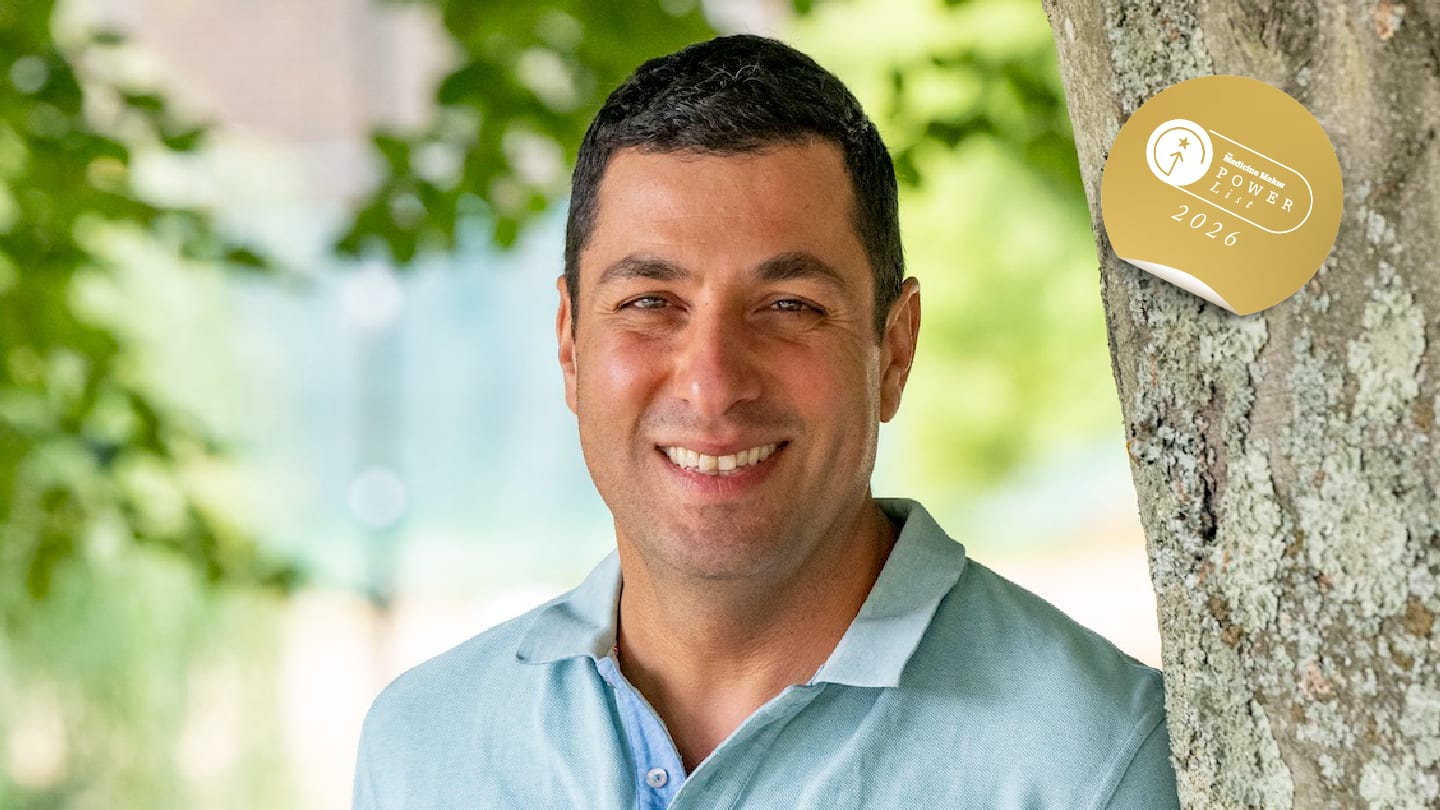
Claudia Zylberberg, PhD, is co-founder and board chair of ARScience Bio, founder and chair of Akron Bio, and co-founder and board chair of Kosten Digital.
Click here to view The Power List 2026
Newsletters
Receive the latest pharmaceutical news, personalities, education, and career development – weekly to your inbox.