For much of the past two decades, China’s biopharma industry was often viewed through the lens of fast-following, contract services, and manufacturing efficiency. But as Chinese companies move up the value chain, pursue more innovative programs, and attract growing interest from multinational pharma, the country’s role in global drug discovery is becoming harder to define in old terms.
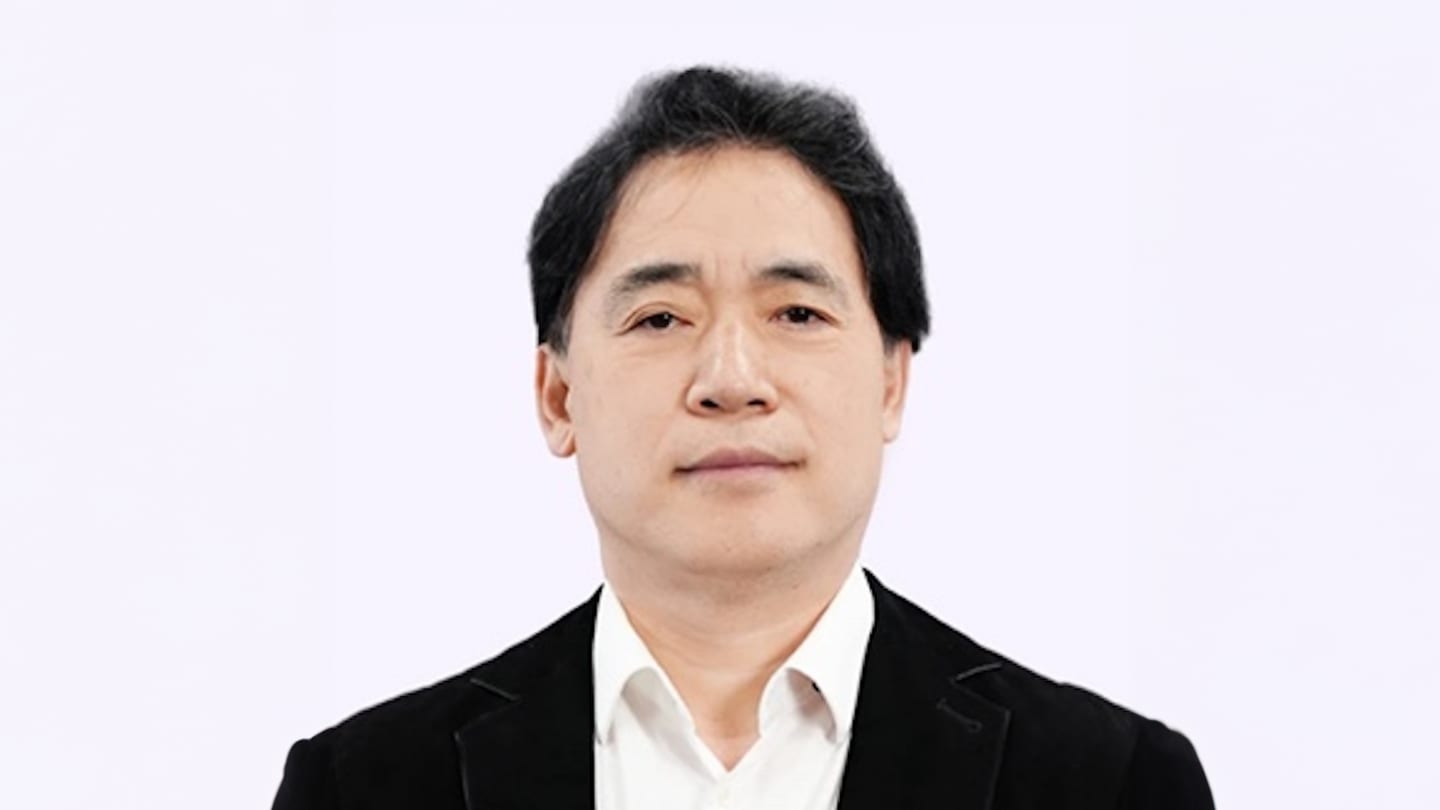
Lance Han, who grew up in China and studied in the US before founding California-based biotech Cyagen Biosciences in 2006, has seen China’s life sciences industry move from supporting global research to taking on a more central role in drug discovery and development.
Here, Han discusses China’s changing innovation landscape, the rise of returnee-led drug discovery, and why deeper ties between Chinese and Western biopharma may be inevitable.
Could you tell us about your background and the founding of Cyagen?
After studying mechanical engineering in China, I went to McGill University in 1996. That same year, my supervisor sent me to Massachusetts Institute of Technology as part of a joint project between MIT and McGill. I spent a year in the mechanical engineering department, working in Newman’s Biorobotics Lab while also taking courses. My professor wanted me to stay on as a PhD student, but I was already over 30 by that point, so I chose instead to begin my career in industry.
I returned to Canada and joined Alcatel, where I worked on computer chips and circuit boards for internet backbone routers and switches. I stayed there for about six years, but by 2004 I had started to grow tired of engineering and was beginning to think about building something of my own.
Around that time, my brother was a professor at the University of Chicago. I had visited his lab many times, including earlier when he was at the Whitehead Institute, and those visits helped spark my interest in the life sciences. After many discussions with him, I began to feel there was a much bigger opportunity in life sciences than in telecommunications. I left Alcatel, went to Queens University of Canada for my MBA, and together we started Cyagen in 2006. We began by producing scientific reagents, then expanded into mouse models and genetically modified mice for different research applications.
Today, Cyagen has facilities in Shanghai, Guangzhou, and Beijing, and serves customers in academia and industry around the world. We now operate as a mouse model company, a CRO, and an early-stage drug discovery service provider, with a focus on life sciences and drug discovery.
From your perspective, how has China’s biopharma industry changed over the past five to ten years?
Over the past 20 years, I’ve witnessed a gradual process of growth and change across the industry in China, but in the past five years, that progress has accelerated dramatically.
Primarily, this has been driven by returnees from the pharmaceutical industry in the West. If you look at Chinese companies, large and small, a significant proportion of founders, CEOs, and senior leaders were trained in the West at some point. Many also worked at companies such as Pfizer or Roche.
Now, even as the world becomes more closed in some ways, China’s drug development industry has moved steadily up the value chain. It initially took on more routine work that Western companies were less interested in, but has since become a source of assets, partnerships, and drug discovery expertise for large multinational companies. Returnees have played a major role in that transition, helping China build a drug discovery system that is very similar to those in Western countries.
What role are Chinese companies now playing in the global biopharma industry?
Chinese companies are playing an important role, partly because they have been willing to fast-follow what is happening in the West. For example, around 10 or 11 years ago, when Keytruda and Opdivo came to market in the West, Chinese companies began pursuing similar approaches. There have been a large number of PD-1 clinical trials in China since then.
That does not mean Chinese companies are only following – many are also making incremental innovations. Rather than only developing monoclonal antibodies, for example, some companies have built on that approach with bispecific antibodies or combinations, such as PD-1 and VEGF. A few companies began reporting clinical trial data two or three years ago that suggested potential advantages over existing therapies, and that made people take them more seriously. Since then, several other Chinese companies have started to follow a similar path.
But this has been a 10-year process. These companies started working on these drugs 10 or 11 years ago, and some have become major players in China today. At the same time, many others did not survive, and even those that have often need to license their assets to multinational companies for the US and European markets while retaining the China rights.
Without those partnerships, the China market alone often is not enough to make them profitable, which is why global licensing has become such an important part of the current landscape.
What factors have driven that growth?
Government support is definitely one factor, but it is not the only one. If you look back 10 or 15 years, when China was still building its biopharma industry, there was not necessarily a huge amount of first-in-class innovation. The main approach was often fast-following, or developing best-in-class rather than first-in-class products.
For many years, as Chinese companies and scientists continued to learn from the West, many adopted the mentality that they should follow and learn before trying to lead. That made companies cautious about focusing on innovation at first – but as the industry has progressed and confidence has grown, we are starting to see more first-in-class examples.
The government has also played a very important role. China has five-year plans, so when the government wants to prioritize something, it includes it in the plan and communicates that down to provincial and municipal governments. Biopharma has consistently been one of the government’s strategic priorities, alongside areas such as semiconductors, green energy, electric vehicles, and related technologies.
When an area is identified as a national priority, funding and support tend to follow. In biopharma, that has helped returnees from major multinational companies turn their drug discovery experience into new companies. The government may evaluate the person, the credentials, and the plan through expert panels, and if there is confidence in the proposal, it may invest or subsidize R&D. Over time, that combination of returnee experience, public support, and growing confidence has helped shape the industry we see today.
How does China’s funding environment compare with what you’re seeing in Western biopharma?
Chinese companies can often access public support, but they also watch Western trends very closely.
Gene therapy is a good example. Chinese companies pay close attention to what is happening in the West, so when gene therapy becomes less fashionable there, the same thing often happens in China as companies and investors follow the trend. A few years ago, there was a lot of discussion in China around gene therapy and rare diseases, but people began to realize it was not as straightforward as it seemed. These drugs are extremely expensive, and the payment models are still unclear. Once those practical realities became clearer, the field cooled down. I’m not saying gene therapy is completely out of fashion, but it is at a low point right now, and people are waiting for the next opening.
More broadly, I would say the industry is becoming more international, with money flowing from West to East and vice versa. South Korea is investing very heavily in biotech, and we are seeing a lot of startup activity there. Japan is much larger than South Korea and has many big companies operating, but we haven’t seen as many startups or small biotechs there in recent years. Singapore is also active, although not to the same extent as South Korea. And, of course, China remains very active as well.
Over the next decade,do you expect more Chinese companies to become global innovators and compete directly in Western markets?
Yes. I think more companies in China are now looking beyond fast-following and working toward first-in-class drugs. My prediction is that 10 years from now, if you look at the top 10 multinational pharma companies, there will be a couple of Chinese companies on that list.
As more success stories emerge, Chinese companies are also building confidence. For many years, there was a perception in China that Western companies were operating at a higher level, but that is gradually changing. More companies now see themselves as capable of competing globally, and that is making them more willing to take risks and pursue new drug targets.
To reach that level, companies have to innovate, either through their own R&D or by acquiring innovation from other companies. Right now, many Chinese companies still rely on multinational companies to run the final stages of clinical development. We do see a small number running their own late-stage clinical trials in the West, but most still rely on Western multinationals for that part.
There is a lot of discussion in China about whether companies should make that investment themselves: whether they should pay to run global clinical trials and retain ownership of potential blockbuster drugs, or license the assets to Western companies and let them handle the final stage and commercialization in those markets. That decision is made harder by the fact that many of these companies are already public, so they need to balance shareholder expectations and short-term returns against the long-term investment required to become global leaders.
I think very soon we will see large Chinese companies running late-stage clinical trials themselves and bringing their drugs to market in the West.
How does Cyagen fit into this increasingly global industry?
We do have people across the globe, but we operate in China for a reason: we can work more efficiently and move more quickly there. At the same time, we have a very international team. Our business development team is diverse in terms of country and region. In China, many of our team members are returnees who were educated in the US, Europe, Australia, Canada, or other Western countries. That means our BD team and our teams in China can speak the same language, both technically and culturally.
We are very global, but everyone works with the same mentality: working together to make the company successful, create value, and ultimately benefit patients.
Could political or regulatory developments slow biopharma globalization?
There are definitely forces pushing back against globalization, but the momentum will be very difficult to stop.
There have been discussions around the Biosecure Act and related US measures. But companies like WuXi, one of the biggest CROs, have already become deeply embedded in the global biopharma supply chain. I think we have reached a point where this kind of globalization is very difficult to reverse. For Western companies, the goal is simple: bring drugs to market, benefit patients, and make money. If Chinese CROs can help them do that more efficiently, why wouldn’t they use them?
Regulations may slow things down, but companies will continue looking for ways to work together. In my view, if countries could set politics aside and compete on performance, we would have a better world. The question should be who can do the work better, faster, and at lower cost, while still helping bring medicines to patients.
That kind of competition may even help countries strengthen their own capabilities. But I don’t think globalization can be easily halted. China and Western countries are already deeply integrated across biopharma, and that level of scientific, technical, and commercial connection is very difficult to unwind.
Lance Han is Chief Innovation Officer & Founder of Cyagen Biosciences.
Newsletters
Receive the latest pharmaceutical news, personalities, education, and career development – weekly to your inbox.