AI may already be widely used in research, but adoption does not necessarily mean that scientists trust the technology or have the tools they need to use it effectively. Elsevier’s recent Researcher of the Future report explored that wider confidence gap among academic and corporate researchers (See: Are Researchers Learning to Trust AI?”).
A separate survey from Sapio Sciences takes a closer look at attitudes inside the laboratory. The company surveyed 150 scientists in the US and Europe working in biopharma, contract research, clinical diagnostics, and pharmaceutical manufacturing. It found that concerns about job displacement are relatively low, while use of public AI tools through personal accounts is already widespread.
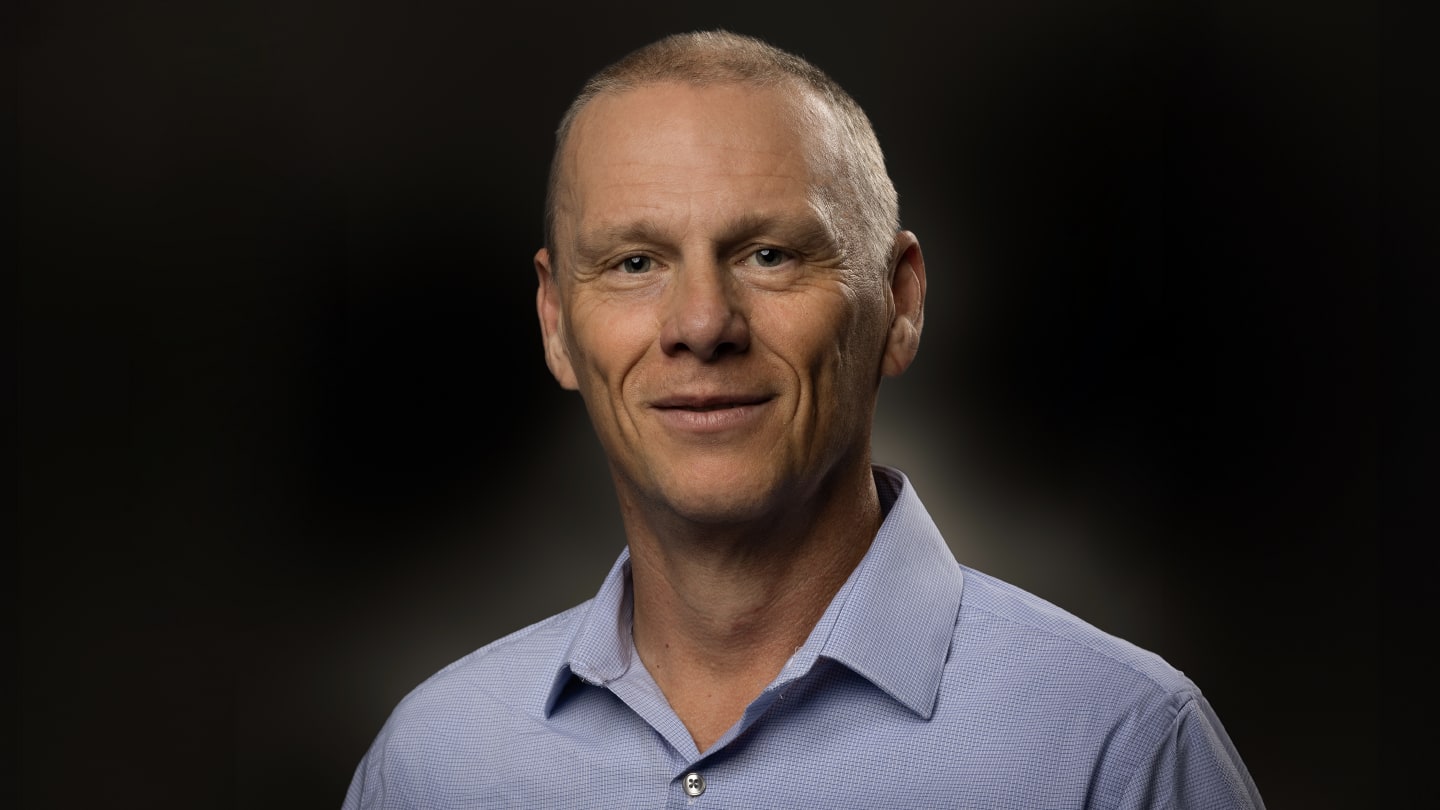
Here, Robert D. Brown, Vice President and Head of the Scientific Office at Sapio Sciences, discusses how companies can introduce AI into laboratory workflows without compromising security or adding complexity.
Could you briefly introduce your latest research – what questions were you aiming to answer, and how was the study conducted?
There is a huge amount of commentary about AI in the lab, but we wanted to find out what the scientists who use this technology really think, what they trust, what they don’t, and whether the job displacement conversation matches what that group is seeing day to day.
We surveyed 150 lab scientists across the US and Europe, all working in biopharma, CROs, clinical diagnostics, or pharma manufacturing, and all actively using an ELN.
What did you discover about how attitudes toward AI vary across different groups of researchers?
The most notable finding is that AI is already widespread in the lab, and scientists are actively using it for a number of research purposes. What was interesting was that only 17 percent said they worry AI could take their job, falling to just 7 percent among early-career researchers.
Our findings also challenged the assumption that the more senior cohort of scientists is resistant to AI. Mid-career researchers were actually the most likely to use public AI tools, with 50 percent of 40–49-year-olds accessing tools such as ChatGPT or Gemini, albeit through logins they created themselves.
That last finding is the one that should concern organizations most. Scientists are using personal accounts on public platforms, with no IP protection and no audit trail. Companies should give scientists purpose-built, corporately managed tools designed for scientific work before this creates a serious governance risk.
What are the biggest practical barriers you’re seeing in laboratory and R&D environments today?
One of the biggest barriers is the gap between corporate ambitions for AI and what bench scientists actually need. CEOs, CIOs, and technology leaders have mandates to become AI-driven, but bench scientists are more pragmatic and will judge AI on its ability to accelerate their research and experimental objectives.
We saw that scientists across disciplines and at different career stages have different expectations of AI in a lab setting. Usability is especially critical for experienced scientists, with scientists aged 50 and over looking for new ways, such as text-based prompts, to interact with software. Younger scientists prioritized more technical or domain-specific capabilities, such as molecular binding simulations, at 93 percent, and genetic sequence optimization, at 79 percent.
We also did not find that scientists distrust AI; in fact, 81 percent said they would trust AI recommendations if they could review the underlying science and evidence. The issue, then, is transparency rather than the technology itself. Scientists are not going to hand over decisions to a system they cannot interrogate – and honestly, they should not.
Your previous work has highlighted challenges around digital tools such as ELNs. What lessons should the industry take from those experiences when it comes to deploying AI?
The fundamental lesson from ELN deployment is that adding tools does not solve the underlying problem. The reason so many labs struggle with data is not that they lack software. Think about what a scientist actually has to navigate during a design-make-test-analyze cycle: make and test happen in the lab and are recorded in the ELN, while design and analysis take place elsewhere, using a separate suite of computational tools with different interfaces, vendors, and file formats.
Those two worlds only meet through manual file transfer, usually carried out by the scientist. Running six design cycles might require 10 computational packages from six vendors, which few scientists have the time to learn. Instead, they wait for a computational scientist to run them – sometimes for a week, which may be a week they cannot afford.
The opportunity for AI is to close that gap. If a scientist can stay in the environment they already work in and get the answer they need from validated, trusted tools through a single prompt, it could significantly reduce the time and cost of early-stage research.
What are the most common issues with scientific data when teams try to apply AI in practice?
Most lab environments have accumulated software over time, which can mean that data gets exported from one system, reformatted, and imported into the next at every step. What you end up with is the same information living in multiple places and multiple formats. That is already a problem, but adding AI makes it worse because the system does not stop to question the quality of the data it receives; it simply acts on it.
For lab leaders, the silo problem creates another difficulty. If a researcher wants a program status update, they may have to look across the ELN, the LIMS, process queues, and multiple dashboards. Not only is that a productivity problem, it undermines the data foundation that any AI layer depends on. Every system in a lab environment needs clean, well-structured data at its core if the AI working across those systems is going to return answers worth trusting.
How can organizations better integrate AI into existing research workflows without adding complexity or disrupting productivity?
I think there are two things to consider here, one operational and the other scientific. From an operational perspective, the goal is AI that understands the platform well enough to handle the tasks that slow scientists down, such as converting a written SOP into a structured experiment template in minutes rather than hours.
The second is scientific: AI that can draw on validated computational tools across the research ecosystem and return an answer to the scientist without them ever leaving their working environment. Queries that would previously mean waiting on a computational scientist or data science team, sometimes for days, get handled in a single prompt.
The scientist gets the analysis they need from the right tools at the point in the experiment where it actually matters. For a scientist trying to decide what to do next without breaking their chain of reasoning, that could make a substantial practical difference.
Looking ahead, what does effective, real-world use of AI in R&D actually look like over the next few years?
In the short term, the priority is helping scientists do more for themselves: ask better questions, analyze data, and decide what to do next without waiting on multiple handoffs. AI coordinates the steps required to carry out the researcher’s decisions, while accountability remains with the scientist.
As trust builds in the system’s ability to orchestrate validated, deterministic tools, the next step is greater use of autonomous agents, with the scientist defining the hypothesis and the platform deciding which tools to call, which data sources to query, and how to assemble the result. That is where you start seeing more virtual design-make-test-analyze cycles, where more of the design and analysis work happens before anything goes near the wet lab.
Ultimately, if AI can shave two years off the front end of a 12-year process, drugs reach patients sooner, patent life extends, and the industry gets better candidates into the clinic, not just faster ones.
Newsletters
Receive the latest pharmaceutical news, personalities, education, and career development – weekly to your inbox.