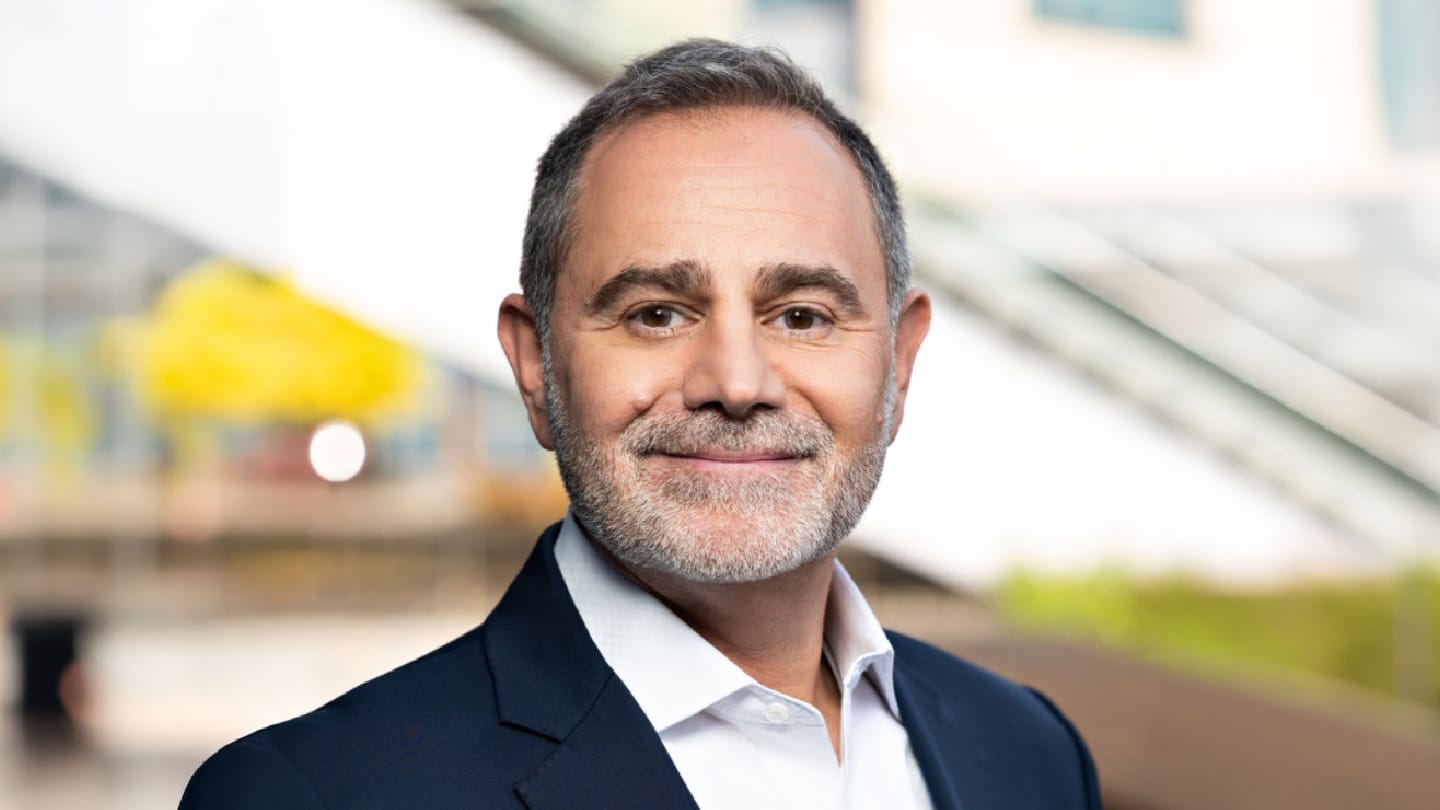
Andres Sirulnik knew from a young age that he wanted to become a hematologist-oncologist. His interest was shaped in part by family experience: an aunt died from leukemia at 12, profoundly affecting his mother and influencing what he heard at home. By 12 himself, Sirulnik was saying he would become a physician and hematologist-oncologist.
That ambition eventually took him from Argentina to the MRC Laboratory of Molecular Biology in Cambridge, where he worked with Nobel laureate César Milstein and learned to make monoclonal antibodies by hand. Sirulnik’s long walks with Milstein through Cambridge became lessons in scientific precision and allowing the data to drive the work.
Sirulnik later moved from patient care and academia into industry, drawn by the opportunity to impact more patients through translational research and drug development. Along the way, he learned to navigate organizations ranging from large pharmaceutical companies to small biotechnology businesses – experiences that also shaped his views on leadership, mentorship, and why aspiring drug developers should resist the temptation to “skip steps.” Today, Sirulnik is Senior Vice President, Hematology Clinical Development Unit Head of Regeneron Pharmaceuticals, Inc.
Here, Sirulnik discusses the experiences that shaped his career, the lessons he learned from Milstein, what it means to follow the science, and his ambition to help develop the next generation of drug developers.
Can you take me back to your early career ambitions. How did you expect your career to unfold?
I’m somewhat unusual in that I knew what I wanted to do from a very early age. I was always fascinated by medicine, and the field of oncology in particular, which was probably derived from traumatic experiences in my family. My aunt died when she was 12 years old from leukemia, which traumatized my mother. And lo and behold, I became a leukemia physician. There’s no doubt in my mind that had a tremendous influence on what I heard at home. By high school, I was already saying, “I’m going to be an oncologist. I’m going to be a physician.” That’s really how I saw myself at that age.
I was involved in visiting hospitals, finding internships, whatever I could do. And it became a very interesting journey that took me from Argentina to England, where I conducted my PhD and worked with somebody I considered my idol, César Milstein –who had invented what I thought was potentially the magic bullet to treat cancer: the technology to develop monoclonal antibodies. Eventually, I learned to make monoclonal antibodies at the MRC Laboratory of Molecular Biology in Cambridge. It was a long journey that took me to where I am today – zigzagging all the way. But the motivation was truly to become an oncologist.
What drew you towards a career in industry?
The drive was to be able to have an impact at a more global level than what I was doing. As a leukemia physician, you are very focused on your patient, which I absolutely love. That stimulated me and kept my true north in focus, which is to benefit people and try to cure cancer. But I realized that a way to impact an even larger group of patients and people beyond academia, which I did for a long time, was through the resources and opportunities that industry affords in doing clinical research – in particular, translational research. I was very fortunate to see firsthand how many people you can impact when you get a drug to patients. That’s really what motivated me.
What lessons did you learn from César Milstein?
César Milstein had worked with Fred Sanger, who later invited him to join the Laboratory of Molecular Biology. Sanger won two Nobel Prizes, and Milstein won one. The lab has been home to an extraordinary number of Nobel laureates. It was a vibrant and amazing place to work – a transformative experience. When you ask me, “How did it impact me? What did I learn?” I am who I am today because I’ve been marked by every experience that I’ve had.
Of course, my time in Cambridge had a profound impact on everything I do: how I see science, how I see research, how I see people. It helped me understand approachability, being humble, and being singly focused on your commitment and your true north – what you want to do and what you want to achieve in your life. Everything I’ve done has marked me in a way that makes me the leader that I am today.
Cambridge was very formative for me – as was César – more outside the lab than in the lab. We would go for walks, and those conversations during those long walks taught me a lot. It was around the beginning of my PhD, and I complained to him about how boring it was to read Nature papers. What he taught me, while we were walking, was about the ambiguity of language. He said the goal is to minimize your language because it can be interpreted in multiple ways – be precise in describing data.
Today, I’m in an organization where data drives everything we do, and I understand and appreciate even more what César taught me long before.
What are the most important lessons you’ve learned about translating promising science into a successful clinical program?
There is one principle that hasn’t changed: follow the science. Ask a relevant question, address a relevant problem, and always keep in mind your true north, which is the patients and, of course, the physicians. It has to be relevant to the patient, clinician, and to the organization.
What changes is how you navigate the external hurdles, whether they are regulatory bottlenecks or enrolment of more patients into clinical trials. Those things are external to that one true north.
The external environment has changed significantly from 20 or 30 years ago. The competitive environment has changed and is changing today. You need to be nimble, agile, pay attention, and adjust. But following the science comes first. That cannot change.
When you’re a doctor, you provide “orders” – that’s what they’re called. You order someone to check a patient’s blood pressure four times a day. You’re used to being in charge. Then you move into a corporation of 150,000 people, and suddenly you’re not the boss anymore. I had to learn how to work in that environment, and I started at the bottom. My advice to anyone is: don’t skip steps. Start at the bottom, do the work, and learn the ropes. If you move up too quickly without that foundation, you can come down just as fast.
A good leader needs to be respected because of their understanding of every aspect of the job. You don’t need to be the expert, but you can ask the right questions. You know what to ask. I went into a large corporate environment and learned to understand a corporation – discipline, structure, standard operating procedures, and how that creates a framework. From that, I became chief medical officer of a company with fewer than 100 people and almost nobody in clinical development. We built it up.
But in a small company, you need to understand the pressures, the agility, the immediacy of what you need to do, because if you don’t do it, you don’t get funding – and money is the oxygen to continue to progress. It’s a very different mindset. Every step teaches you the different aspects, and you apply those learnings to each situation. If you understand how to behave in a corporation and what is important to that corporation.
Understanding that has given me the opportunity to be at a company where I can understand the small and I can understand the large. Having been a physician has taught me how to put this in the context of physicians and patients. All those experiences create the leader that I am today, for good or bad.
Can the principles of good leadership be taught, or is leadership something you ultimately have to learn through experience?
I believe experience is a lot of it. But mentorship – somebody telling you, “This is what you need to pay attention to” – matters too. There are skills that make a good leader that can be learned.
I was a bit of a cowboy when I was younger. I see that in my kids, and eventually they will understand and learn things that I didn’t understand when I was young. That is experience. But I also have to say that there is training – things that I’ve done to improve and understand what it is to be a leader.
It’s something you need to cultivate. Very few people have it naturally, but you always need to cultivate it. And that is learning to be a leader. Some people don’t have the emotional intelligence though, and emotional intelligence is a difficult skill to hone, while other aspects of leadership can be learned more readily.
Looking ahead, what ambitions do you still have for the rest of your career?
I have one big ambition. When I’m no longer here, I hope people will say, “Andres mentored me. I learned something from him that helped me get where I am.” If I’ve helped develop the next generation of drug developers, I’ll be happy. That’s it. It’s about people.
Newsletters
Receive the latest pharmaceutical news, personalities, education, and career development – weekly to your inbox.