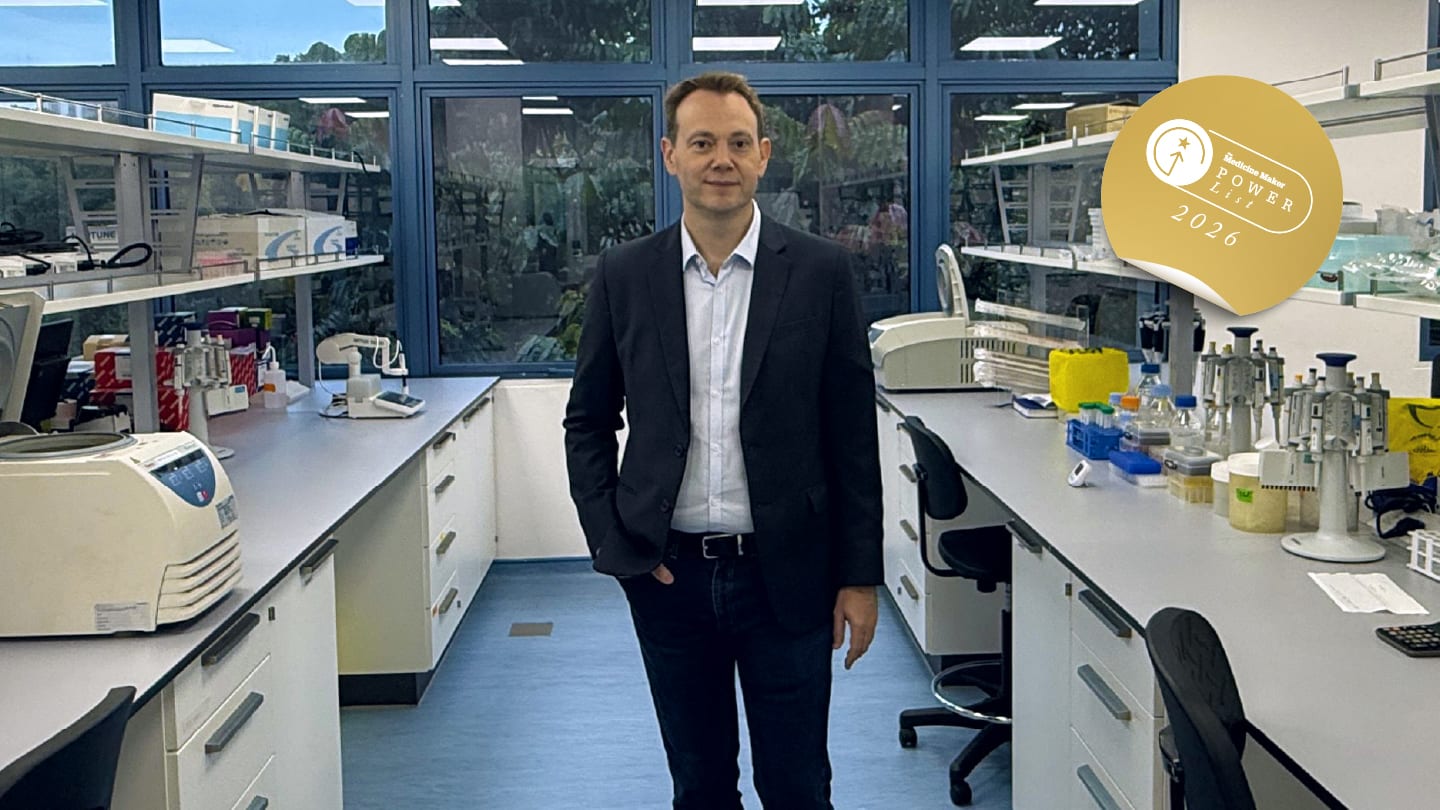
Clinical Scorecard: Musings from The Power List: Piers Ingram
At a Glance
| Category | Detail |
|---|---|
| Condition | Drug discovery and development, including oncology therapeutics |
| Key Mechanisms | The interview discusses dual-payload antibody-drug conjugates, engineered approaches to harnessing the immune system, and the use of data, AI and computational biology in drug development. |
| Target Population | Not specified; the discussion concerns drug-development research and clinical testing rather than a defined patient population. |
| Care Setting | Biopharmaceutical research and development, including preclinical research, clinical trials and regulatory collaboration. |
Key Highlights
- A dual-payload ADC developed by Hummingbird Bioscience in partnership with Callio Therapeutics entered clinical testing.
- The interviewee describes ongoing progress in immunology and engineered approaches to harnessing the immune system, including advances in immuno-oncology, ADCs and T-cell engagers.
- The interviewee identifies clinical execution as the main bottleneck in drug development.
- The interviewee advocates using data, predictive models and engineering principles to improve drug discovery and development efficiency.
- The interviewee expects AI, computational biology and increasingly sophisticated laboratory models to enable more accurate predictions of efficacy and toxicology and reduce reliance on animal models.
Guideline-Based Recommendations
Diagnosis
Management
Monitoring & Follow-up
Risks
- The interviewee describes the high cost and risk of developing medicines.
- The interviewee says clinical trials involve regulatory, logistical and stakeholder complexity that can make it difficult to determine quickly whether experimental medicines are working and use those insights in subsequent development.
- The interviewee describes a translational gap between preclinical research and clinical outcomes.
Patient & Prescribing Data
No specific patient population or prescribing information is provided.
The article reports that a dual-payload ADC entered clinical testing but provides no treatment regimen, efficacy, safety or prescribing details.
Clinical Best Practices
- The interviewee advocates improving clinical trial execution and using study data to inform subsequent development.
- The interviewee proposes greater dialogue between regulatory agencies and broader sharing of lessons from successful regulatory innovations.
- The interviewee proposes applying design principles, iterative feedback and data-informed methods to drug discovery.
Related Resources & Content
This content is an AI-generated, fully rewritten summary based on a published scholarly article. It does not reproduce the original text and is not a substitute for the original publication. Readers are encouraged to consult the source for full context, data, and methodology.